Technology and Data 11 min read
Which Reports Should Airbnb Managers Send Every Month?
Professional Airbnb management reporting requires itemised figures for gross bookings, platform charges, and maintenance costs to ensure HMRC compliance. UK holiday let owners must receive monthly statements detailing occupancy and repair invoices to verify net yields. Clear documentation prevents tax reconciliation errors and protects your rental profit margins.
Oliver Bennett
Short-let Operations Contributor
Writes about practical short-let operations, listing readiness, and day-to-day property management for hosts.

Unclear payout statements from property agents leave many British holiday let landlords guessing about their true commercial returns. Professional short-let accounting requires itemised figures for gross booking totals, platform charges, cleaning fees, and physical maintenance costs. Many agencies provide only a basic single-line bank transfer summary each month. Owners face real tax filing difficulties under HMRC rules when management companies fail to break down gross earnings and deductible expenses. Clear monthly documentation protects your rental profit and ensures total compliance with current revenue regulations.
Essential Numbers in Monthly Reports
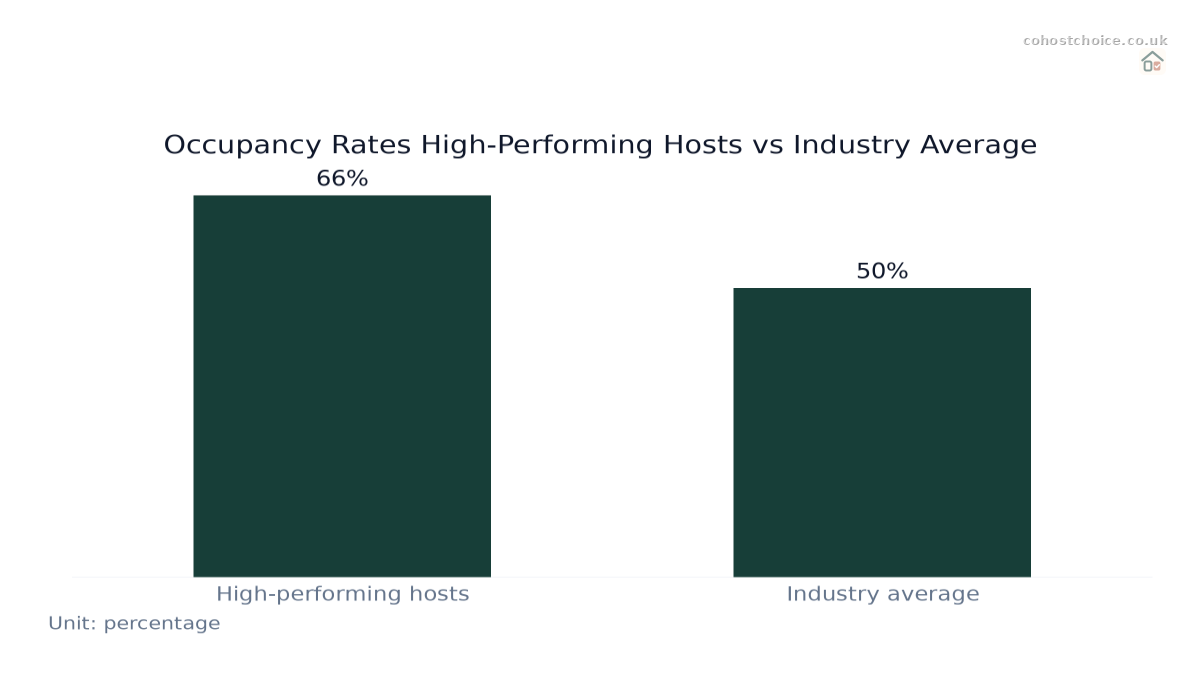
Professional statements must present transparent operational data across every single guest reservation to show your property's commercial performance clearly. A comprehensive property manager monthly statement outlines individual reservation dates, gross booking values, nightly channel pricing, and guest cancellation fees. High-performing hosts achieve 62-70% occupancy compared to the 45-55% industry average, so your statement must measure your property against these standard benchmarks. In contrast, incomplete statements hide poor booking velocity and prevent landlords from tracking seasonal occupancy drops.[1]
Commission structures require clear itemisation on every monthly account summary rather than combined percentage deductions. The report must list management fees separately from OTA channel deductions and guest turnover costs. If an agency calculates management commission against gross guest revenue rather than net accommodation payouts, your operational yields fall quickly. Monitoring these specific financial metrics helps owners identify pricing weaknesses before vacant calendar dates compound across winter months.[1]
Occupancy Rates High-Performing Hosts vs Industry Average
Why Reporting Transparency Protects Owners
Transparent Airbnb management reporting builds trust and gives property owners clear financial records for annual tax assessments. Under current UK regulations, HMRC receives direct platform earnings reports under digital reporting rules, requiring accurate gross figures. Without detailed statements, owners face major reconciliation errors and sudden tax adjustments.[1], [3]
Beyond tax compliance, professional property management agencies maintain strict accounting records to document every monetary transaction. Regulated letting agents must belong to a government-approved client money protection scheme and display their certification clearly.[2] Landlords reviewing options should consider hiring help for airbnb hosting to secure compliant operational statements. In contrast, unregulated operators often mix client funds into standard business accounts.
Clear statements show itemised guest payouts, cleaning fee disbursements, and local tax deductions. A proper statement separates platform service charges from agency commission rates on each booking. If an agent obscures transaction charges, owners cannot claim legitimate business expenses on their tax returns.
Maintenance Logs and Payout Reconciliation
Accurate property maintenance reporting requires itemised contractor invoices, photographic evidence of completed tasks, and clear material cost breakdowns. Monthly statements must detail routine property upkeep, emergency repairs, and scheduled safety inspections with exact contractor receipts. Letting agents must use legally acceptable methods to obtain prompt rental payments and transfer monies to landlords promptly.[2] Without itemised invoices, owners struggle to identify recurring defects or challenge excessive contractor markups.
Payout reconciliation must match the exact calendar payments deposited into your dedicated bank account. A transparent financial report lists gross accommodation charges, subtracts platform commissions, deducts agency management fees, and records exact maintenance disbursements. If your management agency fails to balance ledger deductions against bank transfers, your annual accounting records will fail statutory audits.
Comparing Self-Management and Agency Costs
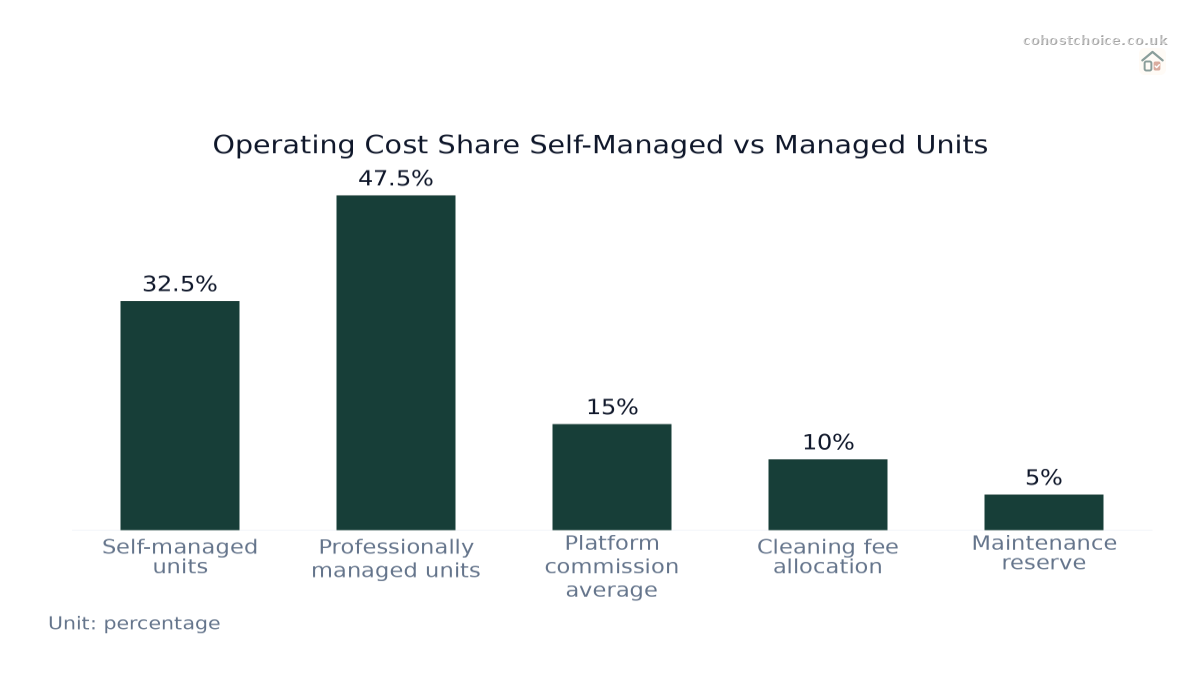
Evaluating short-let owner reports reveals the clear financial differences between self-managing a rental unit and contracting a full-service management firm. Self-managed properties incur operating costs of 25-40% of gross revenue, whereas professionally managed units consume 40-55%.[1] Landlords must carefully examine whether agency commission yields higher net income through superior pricing algorithms.
Owners assessing company proposals benefit greatly from comparing property management service levels across local agencies. Sourced operational benchmarks show typical operating expenses average 32.5% for self-managed units versus 47.5% for professionally managed units.[1] However, full management saves property owners twenty to forty hours of personal labour each month.
Comprehensive monthly statements should demonstrate that higher agency costs generate matching occupancy premiums. Professional operators use dynamic pricing software to lift average daily rates during peak local events. If your net monthly yield falls below self-management benchmarks, your current management contract requires commercial review.
Operating Cost Share Self-Managed vs Managed Units
Evaluating Agencies With CoHostChoice
Independent directories help landlords compare management companies side-by-side using consistent performance metrics and verified service fee structures. CoHostChoice provides a straightforward way to research local operators, review published information on commission rates, and compare genuine companies without sales bias. If an agency conceals its maintenance markup rates or reporting frequency, owners face unexpected service deductions later.
Selecting an operator with clear monthly reporting practices ensures long-term operational success for your holiday let. Landlords can search for verified providers across specific UK service areas to compare like with like before signing long agreements. Reviewing transparent fee schedules ensures you partner with firms that deliver complete financial transparency every month.
Compliance Logs and Safety Tracking
Monthly Airbnb management reporting must include active compliance logs confirming current property safety certifications. UK short-term let legislation imposes strict legal duties regarding gas safety, electrical checks, and furniture flammability. Neglecting mandatory inspection schedules exposes holiday let owners to severe civil penalties and invalidated insurance policies.[4]
Statements should record dates for annual gas safety certifications and mandatory five-year electrical installation condition reports. Gas safety inspections must be conducted annually by a Gas Safe registered engineer to maintain legal operation. In contrast, poor reporting systems miss certificate expiry dates and leave properties vulnerable to sudden regulatory enforcement.
Landlords shifting operational tasks to agencies can manage vacation rental operations safely when monthly reports verify ongoing safety audits. Operating without valid safety records can lead to local council fines up to £2,500. Consistent safety logs prove legal compliance and protect guest welfare throughout the operational year.
Tracking Performance Trends Over Time
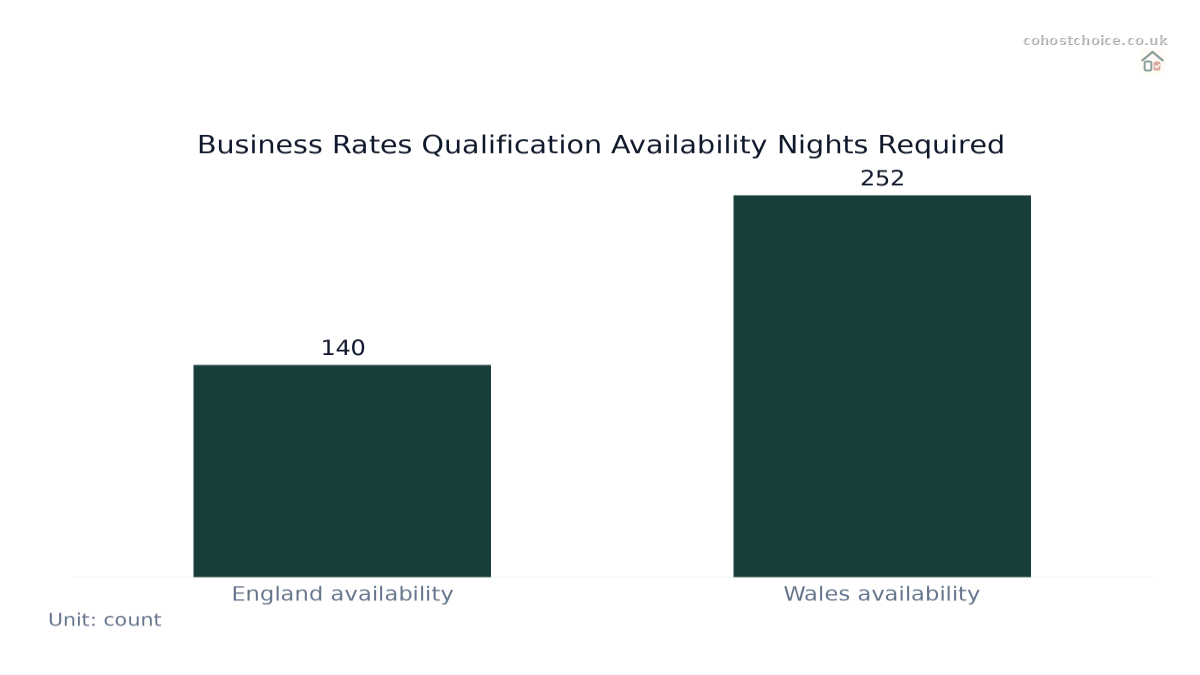
Reviewing your property manager monthly statement over rolling quarterly cycles helps you track revenue trends and regulatory thresholds. In the UK, holiday let tax qualification rules require exact operational records for nights available and nights booked. England business rates qualification requires 140 nights of availability and 70 nights of actual letting, while Wales business rates qualification requires 252 nights of availability and 182 nights of actual letting. If your manager fails to track booked nights, your property may default to standard council tax bands.
Landlords operating in urban markets must also track local authority planning restrictions. For example, London enforces a 90-night annual cap for whole-home short lets without specific planning consent. Property owners must verify short term rental permissions across local councils before expanding annual booking limits. In addition, national availability thresholds demand 140 nights in England versus 252 nights in Wales to secure business rates status. Tracking these figures monthly prevents costly planning breaches and protects your tax position.
Business Rates Qualification Availability Nights Required
What to Remember
A complete monthly statement is your primary tool for monitoring short-let profitability and regulatory compliance. Owners must demand clear itemisation for gross revenue, channel booking fees, management commissions, and verified maintenance expenses. For example, holiday lets in England require at least 70 nights of actual guest stays to retain business rates status. Without accurate monthly figures, landlords risk HMRC penalties and unrecorded operational losses.
Establish a clear reporting standard with your property manager at the start of your contract. Require digital receipts for any repair exceeding your pre-authorised spending cap. If your current provider sends vague summary invoices without guest-level data, use independent platforms to find a transparent management agency.
Frequently Asked Questions
When should my Airbnb manager send the monthly statement?
Professional agencies typically issue monthly statements between the 5th and 10th day following the close of the previous month. This window allows the manager to reconcile bank transfers, guest payments, and cleaning invoices. If your report arrives later than the 15th, your manager may struggle with operational accounting.
Why does my monthly statement show gross earnings instead of net payouts?
HMRC requires landlords to declare gross booking revenue and deduct platform fees as separate allowable expenses. Digital platforms report gross income directly to tax authorities under current international reporting standards. Your manager must record gross figures to keep your annual self-assessment returns accurate.
What maintenance documentation should accompany the monthly statement?
Your manager must supply itemised contractor invoices and receipts for all repairs completed during that billing cycle. Legitimate reports show labour rates, parts costs, and photographic evidence for jobs exceeding authorised thresholds. Avoid agencies that charge flat maintenance retainers without providing third-party trade receipts.
Search verified management agencies by location, compare published fee structures, and request a direct quote on CoHostChoice.
Compare Transparent UK Management Providers