Service Models 10 min read
Local vs National Airbnb Managers: How to Compare Them
Professional local Airbnb management typically increases annual occupancy by 15% to 30% compared to self-managed listings. UK property owners must compare commission rates, which range from 12% to 25%, alongside emergency response protocols. Evaluating these operational differences before signing long-term contracts protects your rental income and ensures better guest satisfaction.
Hannah Clarke
Guest Experience Contributor
Writes about guest communications, smooth stays, and practical ways hosts can improve the guest experience.
British landlords often struggle to select between independent local operators and large corporate short-let agencies. You risk losing thousands of pounds each year when you choose an operational model that ignores local tenant rules and physical maintenance needs. Professional operators can save property owners 10 to 15 hours of work each week while protecting booking stability. A high headline fee does not guarantee rapid emergency callouts or higher net rental returns. The underlying operational data reveals clear differences in how both agency types perform across UK regions.
Comparing Local and National Agency Models
Property owners who compare short-let managers face a stark choice between neighbourhood agencies and large nationwide brands across the UK rental market. Independent local operators manage compact regional portfolios and maintain direct links with tradespeople, whereas national firms deploy centralised reservation technology across several cities. Selecting the right model protects your rental income because management styles directly shape guest reviews, property maintenance speed, and seasonal revenue streams.
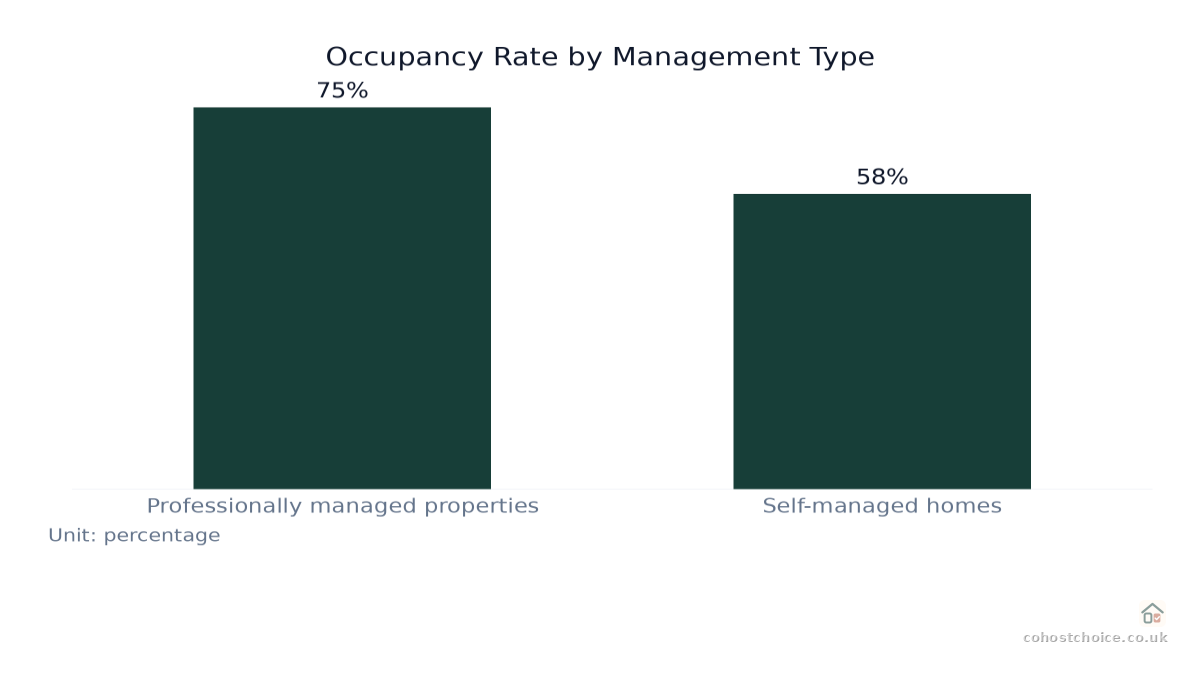
Operational data shows performance gaps between self-hosting and using specialised rental agencies for holiday properties. Professionally managed properties can achieve higher occupancy rates than self-managed homes.[1] Landlords must examine full property management responsibilities before signing long agreements because poorly organised agencies reduce net yields through hidden pass-through fees and poor dynamic pricing adjustments.
Occupancy Rate by Management Type
Service Coverage and On-Site Attention
Local Airbnb management operators work within tight geographical boundaries and visit properties frequently. Their physical proximity allows staff to inspect heating systems, verify cleaning standards, and meet guests during difficult arrivals. When a boiler breaks down on a winter evening, a neighbourhood manager dispatches trusted local plumbers within an hour.
National Airbnb management companies handle hundreds of homes across diverse regions through regional subcontractor frameworks.[3] These businesses coordinate cleaners through mobile software applications, but central desk agents rarely inspect individual properties in person. Service consistency suffers when regional contractor networks lack accountability, which leads to unresolved guest complaints and lower property cleanliness scores on booking platforms.
Independent operators build bespoke service packages tailored to specific property layouts and garden requirements. In contrast, corporate firms enforce uniform service standards that may overlook quirky period features in rural cottages. Owners who demand frequent personal check-ins usually prefer local providers who answer direct mobile calls instead of routing questions through automated support queues.
Emergency Support and Operating Processes
Operating processes separate market leaders from reactive agencies when sudden domestic emergencies threaten active bookings. High-performing short-let operators use specialised channel managers, strict linen inspection protocols, and 24/7 emergency response desks. Evaluating every agency using a consistent format helps confirm who answers guest phone calls at midnight and who pays initial callout fees during urgent repairs.
Contract terms dictate how managers handle structural maintenance, routine safety compliance, and sudden guest lockouts across diverse rental properties. Management fees can range from 10% to 40% depending on the service model.[1] Landlords benefit from formalizing property management agreements early because unambiguous clauses establish spending caps for urgent domestic repairs without delaying tradespeople or harming guest safety.
Management Fee Range by Service Model

Comparing Management Fees and Commercial Returns
Commission structures vary widely across UK holiday let operators and affect your final earnings. Many agencies advertise modest percentage fees but charge extra invoices for professional linen hire, guest consumable restocking, and regular keybox inspections. Landlords must compare like with like by examining full cost schedules instead of trusting introductory marketing claims.
Management commission rates in the UK typically range from 12% to 25% depending on service levels.[2] Lower headline commissions often exclude turnover cleaning, guest communication, and emergency response. Understanding net booking revenue rather than gross commission rates provides a clearer picture of true commercial returns.
Independent portals like CoHostChoice allow property investors to compare published fee rates across verified service areas without commercial bias. Landlords search local postcodes to review contract terms, view pricing models, and identify genuine companies operating in their target rental sector. Transparent data analysis prevents unexpected deductions when monthly accounting statements arrive.
Typical UK Management Commission Rate Range

Market Transparency and Independent Information
Published information provides necessary clarity in an increasingly fragmented UK short-let sector. Independent performance data helps owners review cancellation terms, listing ownership rights, and emergency protocols without industry sales pressure. Access to clear records protects investments because unverified agencies sometimes exaggerate regional occupancy rates to secure exclusive property contracts from unsuspecting landlords.
Beyond fee structures, the transition process between management firms requires careful oversight to prevent operational gaps.
Handover protocols carry operational risks if owners cancel agreements during peak rental periods. Switching short term rental managers without a clear transition plan creates calendar double-bookings and lost guest reviews.[1] Landlords must review contract exit clauses carefully because standard management agreements run for 6 to 12 months with strict financial exit penalties.
Finding Reliable Operators with CoHostChoice
Property investors locate genuine companies across the UK by searching dedicated independent management directories. The platform presents service scopes, contract durations, and pricing structures in a straightforward way to research local and regional operators. Owners review verified details to compare local Airbnb management specialists against multi-city firms operating within identical geographical territories.
Clear business listings help hosts enquire with confidence when choosing an operational partner for their investment property. Portals aggregate fee breakdowns that are often not publicly available on corporate agency websites, which protects landlords from predatory onboarding fees. Property owners maintain full commercial control by assessing objective operational metrics before scheduling property viewings with agency representatives.
UK Safety Standards and Regulatory Compliance
Statutory compliance rules apply equally to independent operators and national management companies across Great Britain. Both agency models must schedule annual gas safety inspections, conduct electrical checks every five years, and complete formal Legionella risk assessments. Landlords must follow an essential safety regulations guide because failure to maintain functional smoke alarms or verify furniture fire safety labels invalidates commercial buildings insurance.
Regional legislation introduces mandatory planning controls and licensing conditions that short-let operators must satisfy. Properties in Greater London face a strict 90-night annual limit for short stays, while Scottish homes require full local authority licences under the Civic Government Order 2022.[2] Responsible managers display official licence numbers, maximum occupancy figures, and valid energy performance ratings on all platform advertisements.
What to Remember
Choosing between local and national Airbnb managers requires balancing personal attention against technology infrastructure. Average UK short-let occupancy sits around 55%, but skilled professional managers lift booking performance to between 65% and 70%.[2] Selecting an agency that pairs responsive on-the-ground contractors with dynamic nightly pricing ensures sustainable profits across all seasonal cycles.
Requesting detailed written fee schedules from at least three competing firms before signing any property management agreement provides necessary clarity. Confirming that your selected manager provides 24/7 guest emergency callouts, maintains statutory safety records, and allows you to keep listing reviews if you decide to cancel protects your long-term interests.
Frequently Asked Questions
What is the typical commission fee for UK short-let managers?
Most professional UK management companies charge between 12% and 25% of gross booking revenue. Some budget firms advertise 10% but invoice cleaning and linen costs separately. Full-service luxury managers can charge up to 40% for complete hands-off operational management.
How do local managers handle out-of-hours guest emergencies?
Local operators usually send staff or trusted local contractors directly to the home within one hour. They maintain personal contact with neighbourhood tradespeople who resolve plumbing or heating faults quickly. National agencies often run remote call centres that triage calls before finding available sub-contractors.
Does hiring an Airbnb management agency guarantee higher rental occupancy?
Professional management generally increases annual occupancy by 15% to 30% compared to self-managed listings. Top agencies achieve occupancy rates around 75% using daily dynamic pricing software. However, no legitimate manager guarantees specific income figures due to shifting market demand.
What happens to my Airbnb listing reviews if I change managers?
Your reviews remain safe if the agency created the listing under your personal host profile. Some national agencies build listings under their proprietary agency accounts, which means you lose all guest history when you leave. Always confirm listing profile ownership in your contract before onboarding.
Are short-let management fees tax deductible in the United Kingdom?
Property owners can deduct commercial management fees as legitimate business expenses against their rental income. This deduction lowers your net taxable profit for HMRC self-assessment calculations. Keep all monthly management statements and repair receipts for at least five years.
Search verified management agencies by postcode, compare commission fees side by side, and request quotes from trusted regional operators.
Compare UK Short-Let Managers TodayReferences
- How To Select An Airbnb Holiday Let Management Company
- The Best Airbnb Management Companies Arent Fully Local Or Fully National
- How To Choose Uk Airbnb Management In 2026
- 6 UK Airbnb management companies compared: coverage, commission, and what’s actually included
- Best Airbnb & Short-Term Rental Management Companies UK | Compare Rates & Services