Regulatory Compliance 10 min read
UK Short-Let Safety Checklist for Property Owners
Property owners retain full legal accountability for guest safety in the UK regardless of management contracts. This guide provides a mandatory short term let safety checklist covering fire risk assessments, gas safety certificates, and electrical inspections. Use these steps to avoid council fines and maintain valid commercial insurance coverage.
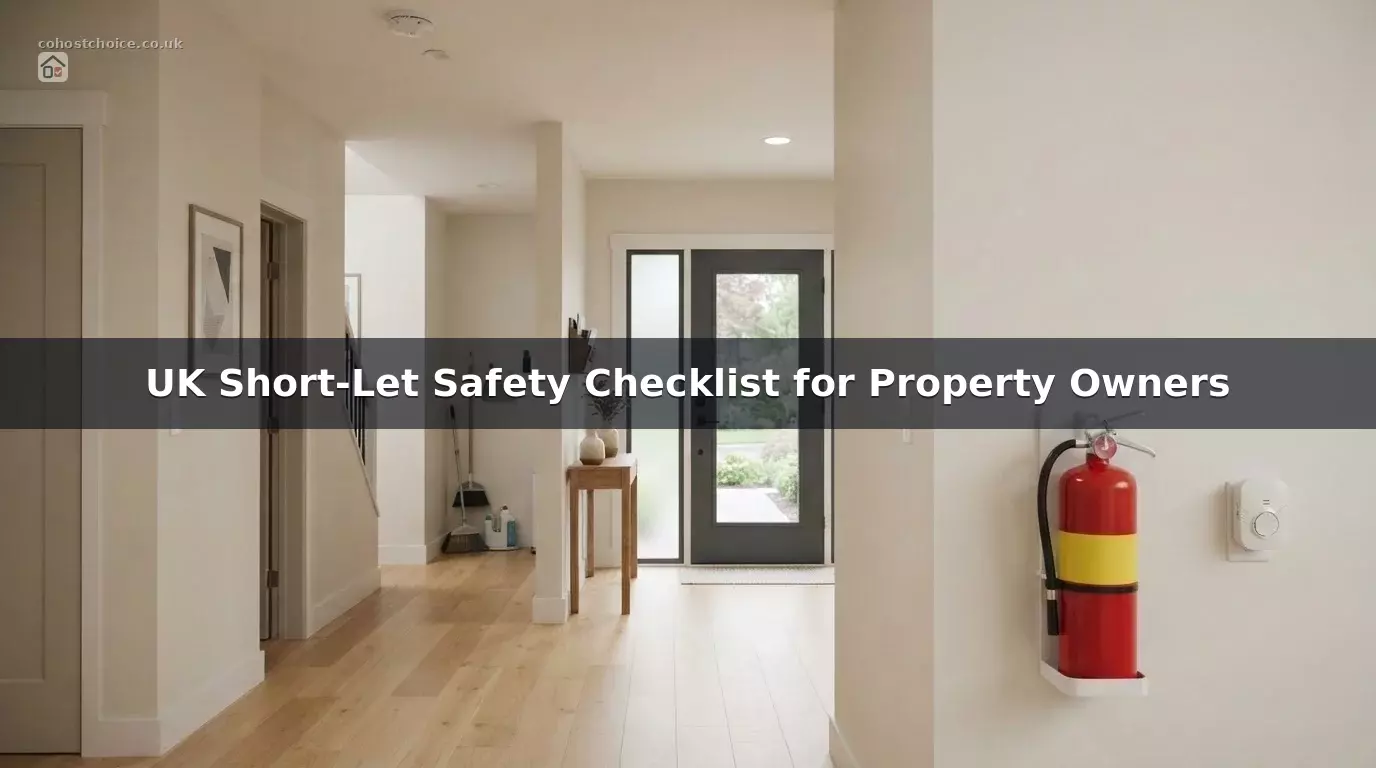
Property owners face strict statutory duties before welcoming a single paying guest across the threshold. Failing to inspect gas fittings, link smoke alarms, or complete written risk assessments exposes you to severe council fines and invalidates commercial insurance. You retain legal accountability as the designated responsible person even after hiring an external host agency. This operational checklist outlines the precise documentation, test schedules, and nation-specific approvals you must hold on file.
The Core Safety Duties Behind Every UK Short-Let Safety Checklist
Every short term let safety checklist UK demands active management across four primary regulatory pillars: fire precautions, gas safety, fixed electrical infrastructure, and linked alarm installations. Property owners hold absolute statutory liability under the Regulatory Reform Fire Safety Order 2005 whenever guests pay for overnight accommodation. Failing to complete these mandatory assessments exposes landlords to immediate prohibition notices and unlimited judicial penalties.
Holiday let safety compliance requires continuous physical verification rather than passive administrative declarations. Owners must coordinate certified engineers to inspect dangerous appliances and eliminate hidden wiring faults before signing operational management agreements. Owners must account for the risks of changing property managers by auditing every active certificate and scheduling mandatory re-inspections well before peak booking seasons.
Who Arranges Safety Inspections: Owner Duties vs Delegated Tasks
Appointing an external letting agency delegates administrative tasks but never transfers statutory legal accountability. Regulators prosecute property owners directly when safety certificates lapse or escape routes remain obstructed. Enforcement authorities issue prohibition notices against the property deed holder regardless of third-party contracts.
Management contracts must explicitly define which party coordinates licensed contractors, pays testing invoices, and maintains physical digital archives. Clear agreements prevent missed inspections by establishing strict calendar reminders and written escalation pathways for overdue works.
Professional agencies often schedule contractor visits using pre-approved panels of certified engineers. However, owners must retain unhindered access to every signed report because courts treat unverified delegation as willful owner negligence.
Safety Duties at a Glance
- Property owners hold non-delegable legal liability under UK fire and utility safety laws.
- Gas appliances demand mandatory annual inspections by certified Gas Safe engineers without exception.
- Electrical installations require full professional testing and an official condition report every 5 years.
- All smoke and heat alarms must interlink across hallways, living spaces, and kitchens.
- Digital compliance files must store historical test records for immediate regulatory or council inspection.
Fire Risk Assessment and Alarm Requirements in Holiday Lets
Meeting current Airbnb safety requirements UK requires a comprehensive written fire risk assessment for every guest property. Landlords must evaluate escape passages, install British Standard compliant alarms, and fit certified carbon monoxide monitors near combustion appliances. Missing emergency documentation allows local fire authorities to close holiday properties immediately under statutory enforcement powers.
British Standard 5839 part 6 specifies Grade D1 interlinked alarms with mains power and tamper-proof battery backups for short-term accommodation. Hosts can deploy Grade F1 sealed-battery units solely as a temporary stopgap measure while arranging permanent mains-wired installations. Escape paths must remain completely unobstructed by storage furniture, and exit doors must open from the inside without keys.
Clear safety briefing cards must sit visibly inside entrance hallways to direct guests toward safe assembly points during emergencies. Property managers must inspect fire blankets, service fire extinguishers annually, and test alarm sounders at every guest turnaround. Commercial contracts must outline specific procedures for managing guest property damage to safety hardware during occupied booking periods.
How Safety Obligations Differ Across England, Scotland, Wales and Northern Ireland
Physical inspection standards for gas and electrical appliances remain uniform across the UK, but administrative licensing regimes diverge sharply between nations. Scotland mandates full municipal licensing before accepting bookings, imposing criminal fines reaching £2,500 on unapproved operators.[1] English local authorities enforce the national Fire Safety Order, while central government introduces mandatory registration rules under the Levelling-up and Regeneration Act 2023.
Welsh legislation requires properties to hit a strict 182-day actual letting threshold to qualify for business rates rather than domestic council tax premiums.[3] Northern Ireland obliges accommodation owners to secure a formal certificate from Tourism NI before marketing guest stays online. Owners expanding portfolios across national borders must verify local planning permissions, council licensing criteria, and visitor levy liabilities before opening calendars.
Safety Certificates and Inspection Duties by UK Nation
| UK Nation | Gas Safety (CP12) | Electrical (EICR) | Fire & Alarms | Registration / Licensing |
|---|---|---|---|---|
| England | Annual Gas Safe check | 5-year inspection | Written FRA & interlinked | National registration emerging |
| Scotland | Annual Gas Safe check | 5-year inspection | Strict interlinked rules | Mandatory council licence |
| Wales | Annual Gas Safe check | 5-year inspection | Written FRA & interlinked | Statutory visitor register |
| Northern Ireland | Annual Gas Safe check | 5-year inspection | Interlinked detection units | Tourism NI certification |
| Isle of Man | Annual Gas Safe check | 5-year inspection | Grade D1 linked system | Registration required |
| Guernsey / Jersey | Annual Gas Safe check | 5-year inspection | Island fire code standard | Local tourism permit |
Gas Safety Certificates and Electrical Checks: CP12 and EICR Explained
UK gas regulations require an annual inspection for every gas appliance, flue, and pipework installation inside paying-guest accommodation.[2] Only engineers carrying valid credentials on the official Gas Safe Register can legally perform these examinations and issue the CP12 certificate. Landlords must provide copies of this certificate to incoming guests or display the document prominently within the property.
Electrical Installation Condition Reports verify the physical integrity of consumer units, internal circuits, and socket outlets every 5 years.[1] Qualified electricians evaluate grounding systems, look for damaged wiring, and test safety switches under simulated fault conditions. Any serious C1 or C2 fault codes demand immediate remedial repairs before allowing paying guests inside the building.
Portable Appliance Testing supplements fixed wiring reports by checking small kitchen appliances, electric heaters, and entertainment devices every 12 months. Landlords must remove damaged toasters, frayed cords, and unbranded replacement chargers immediately from short-stay premises. Owners must check short term let regulations to ensure both fixed certificates and portable appliance logs satisfy local enforcement thresholds.
Owner vs Management Company: Who Arranges Each Safety Check
| Aspect | Property Owner | Management Company |
|---|---|---|
| Gas Safety Inspection | Holds statutory liability | Books certified engineer |
| CP12 Inspection Cost | Pays engineer invoice | Recharges with admin fee |
| Electrical Testing (EICR) | Funds 5-year overhaul | Coordinates site access |
| Fire Risk Assessment | Approves written document | Drafts operational plan |
| Alarm System Testing | Funds hardware upgrade | Tests on turnaround |
| Emergency Briefing Signs | Reviews house rules | Installs clear notices |
| Remedial Safety Repairs | Authorises spending limit | Manages repair crew |
| Compliance Record Storage | Retains legal master files | Holds digital portal copy |
Keeping Safety Records: Renewal Dates and Document Retention
A structured short let property inspection requires comprehensive digital and physical records available for immediate regulatory review. Operators must retain gas safety certificates for a minimum of two years, alongside active five-year electrical reports and risk evaluations. Fire rescue officers and local authority housing teams can request these compliance logs without prior formal notice.
Effective holiday home administration links safety expiry dates directly to reservation management calendars to prevent lapses during busy rental periods. Hosts must track annual boiler services, legionella water assessments, and insurance renewals systematically. Owners must review vacation rental management agreements carefully to avoid problematic short let contracts and confirm whether their managing agency monitors renewal dates automatically.
What to Confirm With a Management Company Before You Sign
Holiday let landlords must review management proposals thoroughly before signing delegation agreements. Demand written copies of contractor accreditations, verified emergency response protocols, and automated certificate tracking schedules from every prospective agency. CoHostChoice helps owners compare service offerings, pricing terms, and compliance standards across genuine companies to simplify this selection process.
Management contracts must explicitly assign responsibility for booking mandatory re-inspections, managing emergency repairs, and maintaining guest safety packs. Property managers can claim their business profiles on comparison directories to confirm their service areas and published information remain accurate. Never sign an agreement that leaves safety oversight ambiguous, because courts hold the property owner fully accountable for any statutory violations.
Verifying Current Official Requirements: Gov.uk and Local Council Sources
Property regulations evolve rapidly across UK local authorities as municipal councils introduce selective licensing schemes and planning controls. Owners must review live guidance on Gov.uk and municipal planning portals rather than relying on outdated informal forum summaries. Comparing like with like across published guidance helps landlords separate genuine statutory obligations from optional hospitality enhancements.
Prospective hosts must evaluate local planning rules regarding short-term lets, especially where councils enforce specific planning classes. Owners should evaluate true insurance costs alongside certification charges to build an accurate operational budget before launching a holiday rental. Independent public registers like the Gas Safe Register provide quick tools to confirm trade qualifications before booking on-site safety assessments.
What to Remember
Property owners hold non-delegable legal accountability for guest safety across all UK jurisdictions regardless of third-party management arrangements. Maintaining active Gas Safe certificates, five-year electrical reports, and interlinked fire alarms protects your business from civil penalties reaching £5,000 and invalid insurance policies.[1] Treating safety compliance as a continuous operational habit safeguards your guests and secures long-term rental income.
Audit existing property certificates today against this checklist to identify any missing assessments or upcoming expiry dates before accepting new bookings. Request written compliance protocols from prospective management agencies to ensure their team manages contractor renewals reliably. Taking direct control of regulatory documentation guarantees complete peace of mind across every holiday let.
Frequently Asked Questions
Can a property management agency take over my legal safety liabilities?
A management agency can coordinate tradespeople and file paperwork, but they cannot assume your statutory liability under UK law. Regulators prosecute property owners directly when safety certificates expire or fire precautions fail.
How often must I book gas and electrical safety inspections?
A certified Gas Safe engineer must inspect all gas appliances every 12 months to issue a valid CP12 certificate.[2] Qualified electricians must inspect fixed wiring systems and issue an Electrical Installation Condition Report every 5 years.
Do booking platforms like Airbnb require extra safety steps?
Major booking platforms require hosts to confirm working smoke alarms, carbon monoxide detectors, and functional fire exits before listing. Some platforms also demand direct uploads of official safety certificates to verify listing compliance.
What happens if a property fails its electrical installation condition test?
Electricians mark serious hazards with C1 or C2 fault codes that require immediate remedial work before renting the property. Landlords must obtain written proof that a certified contractor resolved these defects before guests check in.
Are battery-powered smoke alarms acceptable for holiday accommodation?
Current regulations require interlinked alarms that sound simultaneously across all storeys of the home. Grade D1 mains-powered systems with tamper-proof battery backups represent the required long-term British Standard for guest accommodation.
How do safety regulations differ between England and Scotland?
Scotland enforces a mandatory local council licensing system that requires proof of safety compliance before trading begins.[1] England relies on the Regulatory Reform Fire Safety Order, alongside emerging national register requirements.
Do I need a written fire risk assessment for a small holiday home?
UK fire safety law requires a written fire risk assessment for all properties charging paying guests, even for one night stays. The assessment must identify ignition sources, detail emergency evacuation routes, and confirm working detection equipment.
Search leading property management companies by location, evaluate their safety services side-by-side, and request a direct quote from your preferred partner today.
Compare Short-Let Managers and Request Quotes