Short-Let Management 9 min read
Service Area Gaps That Leave Short-Let Properties Unmanaged
Commercial letting agencies often decline properties outside their specific service area to maintain operational efficiency. Owners in these gaps retain 15% to 30% more revenue by choosing self-management or remote co-hosting. These models provide practical control over guest stays, maintenance, and compliance for holiday homes located beyond standard agency boundaries in 2026.
Hannah Clarke
Guest Experience Contributor
Writes about guest communications, smooth stays, and practical ways hosts can improve the guest experience.
Rural locations and coastal boundaries often prevent commercial letting agencies from taking on promising holiday homes. You face a direct operational dilemma when professional companies decline contracts purely because your postcode sits past their operational driving limits. Management agencies may charge fees ranging from 15% to 30%, but these services stop where contractor routes end. You do not need to abandon short letting simply because national firms refuse coverage for your home. Clear operating models like self-management and remote co-hosting give you practical control over guest stays, compliance, and property turnover.
Defining Service Area Limitations
A strict service area boundary protects management companies from excessive travel times and failed emergency turnarounds. Agencies build operational zones around concentrated city hubs or busy tourist corridors to cluster their housekeeping teams. Property location outside these tight zones creates severe response delays, because trade staff refuse long callouts for routine call-outs. When you manage guest arrival procedures yourself, you bypass these rigid operational limits and secure your calendar directly.
Management agencies may charge fees ranging from 15% to 30% to run standard holiday let operations. Rural homes often require long travel times, which may lead agencies to add travel surcharges or decline the contract. These fee structures generally reflect the complexity of providing consistent service in remote areas.
Contractor logistics dictate coverage limits across regional markets in England, Wales, and Scotland. Companies often prefer dependable turnaround staff within 20 minutes of each home to clean rooms between midday checkouts and afternoon check-ins. Distant properties increase fuel costs, so agencies choose to drop fringe properties to protect their central profit margins.
Typical Management Agency Fee Range

The Reality of Self-Management
Self-management gives you direct operational control over your calendar, guest communication, and night rates. Independent hosting is often most suitable for owners who live within 15 to 20 minutes of the premises. Managing a remote property from a distance demands personal time, constant phone access, and local relationships with reliable plumbers, electricians, and cleaners.
Owners must resolve unexpected maintenance calls, coordinate linen deliveries, and manage guest questions without third-party assistance. Standard home insurance fails to cover commercial paying guests, so you must secure specialist holiday let insurance before taking reservations.[1] Operating independently requires a structured schedule to prevent guest complaints and avoid empty calendar gaps.
Remote Co-Hosting as Strategic Alternative
Remote co-hosting separates digital listing management from physical on-site tasks to bypass local coverage gaps. A remote co-host handles price setting, guest screening, and messaging from any computer location, while you retain local property oversight. This split operational model allows you to manage vacation rental emergencies with local tradespeople while your co-host manages guest communications efficiently.
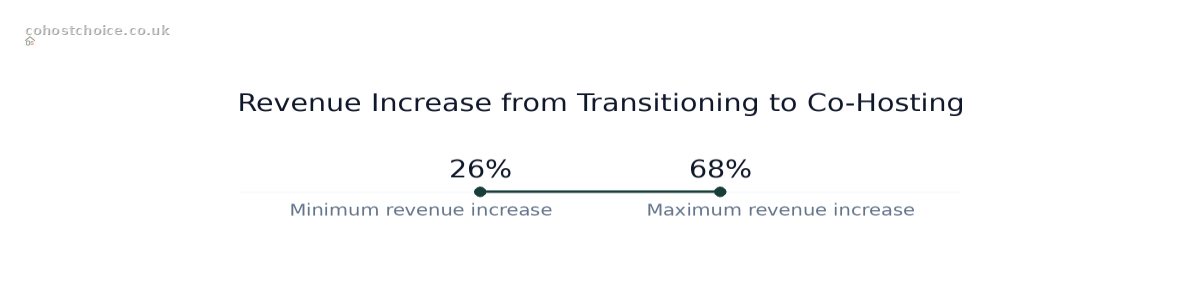
Owners who transition from self-managing to co-hosting may experience revenue increases between 26% and 68%.[2] Professional co-hosts often adjust nightly prices dynamically according to seasonal demand, which can drive these revenue gains. Actual performance varies based on property location and market demand.
Revenue Increase from Transitioning to Co-Hosting
Financial Implications of Independent Management
Direct operations remove third-party agency deductions from your monthly rental income statements. Self-management avoids the 15%-30% agency fees often associated with professional management services. This financial saving means you retain full gross rental revenue, which offsets the personal time spent scheduling maintenance and guest turnover.
Your balance sheet retains higher net earnings by avoiding commission tiers on every guest booking. Retaining this margin protects your cash flow against unexpected seasonal voids and high energy bills. Independent hosts avoid the 15% to 30% fee range typically charged by many full-service agencies.
Agency Fee Range Avoided by Self-Management

Operational Challenges in Unmanaged Regions
Fringe locations suffer from a severe shortage of commercial linen services and emergency trade technicians. You must build dependable relationships with local independent cleaners and handymen to avoid long property downtime. Independent operators must handle mandatory property registration tasks to protect their business legitimacy before taking online reservations.
Smart technology reduces operational friction when managing properties outside standard company zones. Keyless smart locks remove physical key exchanges, while automated noise monitors alert you to unauthorized parties without disturbing neighbors.[1] Establishing clear issue reports allows local contractors to record property conditions, observe damages, and take corrective action quickly.
Finding Reliable Short-Let Management Support
Property owners outside central metro areas must evaluate different commercial management models carefully. Independent hosts find genuine companies by assessing operational scope, emergency callout terms, and commission percentages. A comprehensive search helps you verify whether specialist regional providers serve your exact postcode.
CoHostChoice provides a straightforward way to research local and regional short-let management coverage across the United Kingdom. Property owners can compare like with like in a consistent format using published information on services and pricing. This platform lets you enquire with confidence to discover whether regional operators manage short-let properties in your specific location.
Operators who claim their business profiles may help their published service areas remain accurate and updated. Reviewing transparent business data prevents surprise cancellations caused by agency boundary restrictions. Clear comparison data helps you choose between full local management, hybrid support, or remote co-hosting.
Regulatory Compliance for Independent Hosts
Independent hosts must manage statutory safety duties directly when operating outside full-service management contracts. You should secure a valid Gas Safety Certificate and hold an Energy Performance Certificate where required by local regulations. Understanding guest accident waiver clauses helps you clarify building rules while maintaining appropriate public liability insurance.
Short-term let licensing rules apply across Scotland under the Civic Government Scotland Act 1982 Order 2022. You may need to hold a valid short-term let licence to accept bookings, pass a fit and proper person test, and complete a legionella risk assessment. Ensure you display your licence number, maximum occupancy, and EPC rating on all public listings as required by law.
What to Remember
Service area limitations do not prevent profitable holiday letting when you adopt practical operating alternatives. Self-management allows you to retain the 15% to 30% of gross booking revenues that many full agencies typically collect. Transitioning to remote co-hosting can potentially raise listing earnings by 26% to 68% through professional dynamic pricing and dedicated guest support.
Owners must audit their local contractor networks and verify statutory licensing rules before taking reservations. Check your postcode against regional provider networks, test smart door access, and complete your mandatory safety certificates. Choosing between independent hosting and remote co-hosting gives you full operational control over isolated short-let assets.
Frequently Asked Questions
Why do management agencies reject properties outside their service area?
Agencies establish geographic borders to ensure cleaning and maintenance teams can reach properties within reasonable travel times. Remote properties increase travel costs and create emergency response delays that harm service standards.
What is the difference between full management and remote co-hosting?
Full management handles both physical property turnover and digital guest messaging for a commission. Remote co-hosting focuses on online pricing, guest communication, and listing settings while the owner coordinates local trades.
Can I self-manage a holiday let if I live far away?
Self-management is often considered most suitable when you live within 15 to 20 minutes of the property. Managing from a distance requires dependable local cleaning contractors and trusted emergency trade contacts.
Do I need planning permission to run a short-let property independently?
Changing the use of a dwellinghouse to a short-term let may constitute a material change of use requiring planning permission depending on local council planning policies. You should check your local planning authority rules before accepting paying guests.
What mandatory safety certificates do independent UK hosts require?
You must secure a Gas Safety Certificate dated within the last 12 months and maintain a valid EPC certificate issued within the last 10 years. Scottish properties also require an approved short-term let licence and a legionella risk assessment.
Search verified management companies by location, compare service packages and fees, and request direct quotes for your holiday property.
Find Short-Let Managers in Your Region