Service Models 9 min read
How to Verify a Manager's Occupancy Claim Before Signing
UK short-let occupancy averaged 54% in August 2025 across 374,000 listings. Property owners must verify occupancy claims by requesting raw channel manager data rather than trusting marketing brochures. Auditing trailing twelve-month reports and checking regional planning caps protects your rental income from unrealistic revenue forecasts and potential statutory fines before you sign.
Hannah Clarke
Guest Experience Contributor
Writes about guest communications, smooth stays, and practical ways hosts can improve the guest experience.

Pitch decks from short-let agents often promise 85% year-round occupancy without showing net booking records or seasonal drops. You risk severe income loss when you sign a long contract based on gross projections rather than verified multi-channel data. Independent research confirms that actual UK short-term rental occupancy averaged 54% in August 2025 across more than 374,000 listings. Auditing genuine performance metrics before signing protects your rental cash flow from unrealistic revenue forecasts.
Verifying Base Short-Let Performance Metrics
Property owners must verify occupancy claims by checking raw calendar exports rather than trusting marketing brochures. Short-let managers often exclude unlisted maintenance blocks from their calculations, which artificially inflates their reported booking percentages above the true market baseline. Inexperienced landlords who evaluate managing airbnb rentals effectively discover that unverified projections hide slow mid-week demand and seasonal winter gaps.
Accurate verification involves auditing the total turnover costs associated with high booking frequencies across the year. Cleaning costs per turnover in the UK typically range from £50 to £80, and high turnover rates reduce overall net profit if a property manager chases volume over length of stay.
UK Cleaning Costs per Turnover Range

Calculating True Occupancy and RevPAR
Occupancy rate measures the number of booked nights divided by total available calendar nights. Unscrupulous operators divide booked nights only by active days, ignoring owner blocks and vacant unlisted periods. This calculation trick artificially inflates a 50% actual rate to an impressive 80% on paper.
Revenue per available room, known as RevPAR, provides a much clearer picture of overall property health. You calculate RevPAR by multiplying the average daily rate by the occupancy rate.[2] This metric prevents managers from masking cheap, discounted bookings behind impressive occupancy headlines.
High booking rates mean little if the daily price drops below operating costs. Balancing price and volume remains essential to cover regular utility bills, as weak pricing policies quickly erode seasonal property income.
Spotting Skewed Calendar and Pricing Thresholds
Checking occupancy rate figures against regional benchmarks protects owners from unrealistic promises made during sales presentations. High occupancy often signals that a manager prices rooms far below market value just to generate booking commissions. Property owners who manage holiday home finances must track net yields rather than top-line guest numbers to maintain positive cash flow.
For instance, a property in a coastal town might show 90% occupancy in July but drop to 10% in November; a manager claiming a flat 75% annual rate without accounting for this seasonal dip is likely misrepresenting the property's true earning potential.
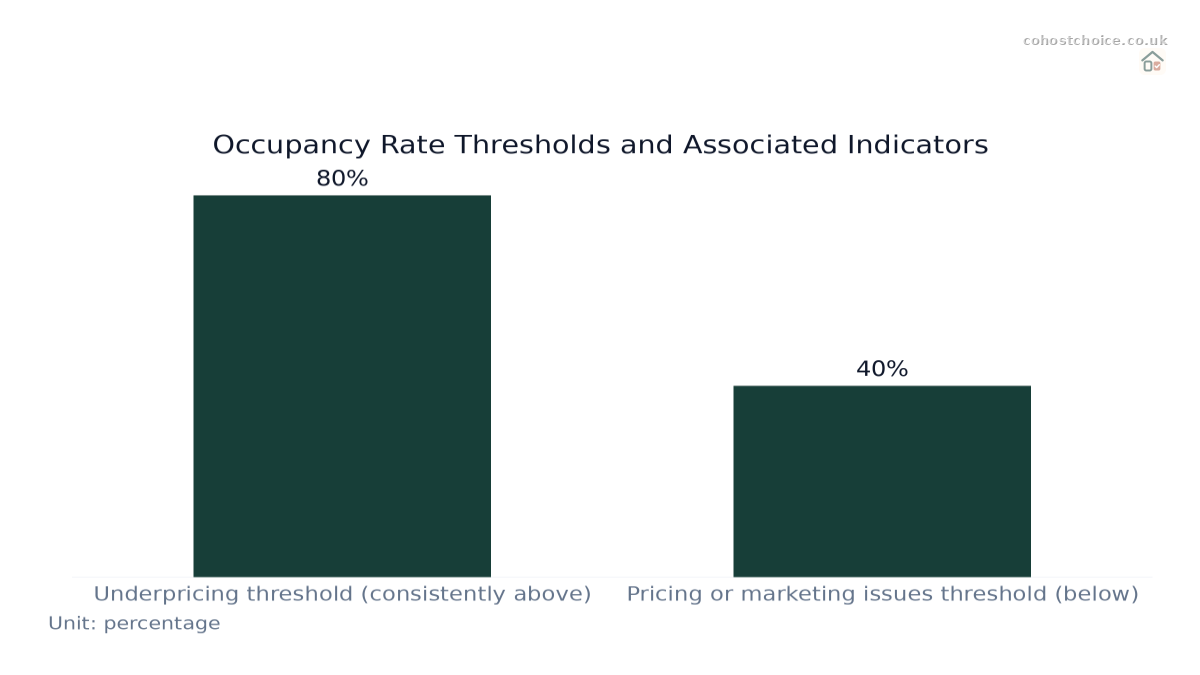
Occupancy rates consistently above 80% may suggest underpricing, while rates below 40% indicate issues with pricing or marketing.[2] A balanced strategy targets realistic local figures while maintaining healthy nightly pricing. Managers who discount rates excessively increase property wear and tear while lowering net owner payouts.
Occupancy Rate Thresholds and Associated Indicators
Auditing Historical Average Daily Rates
Average daily rate verification requires reviewing trailing twelve-month revenue statements from comparable local properties. Demand shifts sharply between summer peaks and winter troughs across all regional property markets. In the UK, the average daily rate reached £330 in August 2025, representing a 15% increase from the previous year.
Managers who only show August statements provide an incomplete and deceptive picture of annual performance. Requesting trailing annual averages reveals off-peak revenue and real booking volumes, exposing whether a firm can secure bookings during slow February trading.
Platform dashboards show raw earnings but often omit marketing deductions and platform service charges.[3] Net payouts reveal the actual revenue landing in the owner bank account. Hidden deductions can shrink gross claims by 20% or more.
Requesting Raw Channel Manager Data
Direct software reporting tools provide unfiltered performance records across multiple short-let booking platforms. Property management software tracks cumulative booked nights across Airbnb, Booking.com, and direct websites without manual spreadsheet adjustments.[1] Owners who understand responsibilities for collecting visitor taxes examine consolidated software reports to confirm actual reservation volumes.
Beyond simple revenue figures, the technical tools used by a management firm offer the most reliable evidence of their operational efficiency.
Channel manager logs show precise check-in dates, cancellations, and nightly guest tariffs for every reservation. These records expose whether an agency relies solely on heavy discounts or maintains steady corporate bookings throughout the year. Demand transparency before signing any management agreement.
Evaluating Local Regulatory Constraints
Regional planning rules and licensing mandates place strict legal boundaries on total annual short-let occupancy. Operating without a required license is a criminal offense in Scotland, which invalidates exaggerated booking promises.[1] Managers must present operating models that respect regional statutory limits and legal standards.
Local legislation further dictates how many nights a property can be legally let, which directly impacts the maximum achievable occupancy.
London properties face a statutory 90-night annual cap on short-term rentals unless planning permission exists. Exceeding this limit without council approval can trigger fines of up to £20,000 for non-compliant owners.[1] Honest management companies adjust their financial projections to match these strict local regulations.
In Wales, self-catering holiday homes must meet a 182-day actual letting threshold to qualify for business rates. Unrealistic calendar management risks council tax penalties. Competent operators track these regional requirements accurately.
Mandatory Safety Checks and Operating Realities
Legal compliance duties directly affect property availability by requiring routine maintenance blocks between guest stays. Gas safety inspections require an annual check by a Gas Safe registered engineer, while electrical safety inspections must occur at least every 5 years. Checking legal requirements for hosts confirms that regular safety inspections require planned calendar downtime.
Properties that fail mandatory standards face immediate listing suspensions and heavy statutory council fines. Scottish licensing rules penalize false application statements with fines of up to £2,500. Quality managers plan routine maintenance windows into their occupancy forecasts.
Comparing Management Proposals Side by Side
Property owners need a straightforward way to research local agencies and compare like with like across published fee structures. Pitch materials frequently conceal operational costs, platform commissions, and onboarding expenses behind high occupancy targets. CoHostChoice provides a consistent format that allows landlords to examine verified operational profiles, service areas, and contract terms without sales pressure.
Genuine companies openly share their past twelve-month performance data and explain seasonal variations clearly. They demonstrate how their guest screening processes reduce property wear while protecting owner rental margins, allowing landlords to compare quotes carefully before committing to any long-term contract.
What to Remember
Verifying a short-let manager's occupancy claim requires looking beyond attractive marketing decks and headline percentages. UK national occupancy averaged 54% in August 2025, showing that claims exceeding 80% require thorough justification. Demanding trailing twelve-month booking reports, checking average daily rates, and auditing cleaning schedules provides the necessary clarity before signing any agreement.
Property businesses stay protected by requesting raw channel manager exports and cross-referencing claims against regional planning restrictions. Confirming statutory compliance requirements including gas safety and 5-year electrical checks helps avoid costly listing suspensions, while selecting a management partner that delivers realistic revenue projections ensures transparent operational accounting.
Frequently Asked Questions
What is a realistic annual occupancy rate for a UK short-let?
Most healthy UK short-let properties achieve annual occupancy rates between 50% and 70% depending on location and seasonal demand. Rates claiming consistent year-round levels above 80% often indicate severe nightly price discounting.
How do managers artificially inflate their occupancy numbers?
Managers often exclude unlisted dates, maintenance periods, and owner-stay weeks from the total calendar calculation. This practice reduces the total denominator, which makes the resulting occupancy percentage look significantly higher on pitch decks.
What raw data documents should I request before signing?
Request trailing twelve-month revenue statements and channel manager calendar exports from comparable local properties. These reports show true nightly rates, vacancy periods, and platform fee deductions without manual editing.
Does London short-term letting have an occupancy limit?
Greater London enforces a strict statutory limit of 90 nights per calendar year for short-term residential lettings without planning permission. Operators claiming full-year occupancy for London residential flats must hold commercial planning approval.
How often should electrical safety checks occur on short-lets?
Electrical Installation Condition Reports must occur at least every 5 years under short-term let licensing standards. Portable appliance testing must also take place regularly for all electrical items accessible to guests.
Search verified management companies by location, compare real fees side by side, and request quotes from trusted local providers.
Compare Short-Let Managers in Your Area