Regulatory Compliance 8 min read
The 5% Edinburgh Visitor Levy and Who Collects It From Guests
The City of Edinburgh Council mandates a 5% visitor levy on net accommodation revenue for short-term stays. Property owners hold the primary legal responsibility for collecting this tax and submitting quarterly returns. This guide explains how to configure booking systems, manage exemptions after five nights, and verify tax compliance in management contracts.
Hannah Clarke
Guest Experience Contributor
Writes about guest communications, smooth stays, and practical ways hosts can improve the guest experience.

Operating overnight accommodation across the capital now brings direct statutory tax duties for every booking you accept. The City of Edinburgh Council mandates a 5% levy on net lodging revenue, so hosts must establish transparent collection workflows immediately. Reviewing real operational mechanisms and contract boundaries will help you manage these guest charges without risking local authority penalties.
Edinburgh Visitor Levy Framework Explained
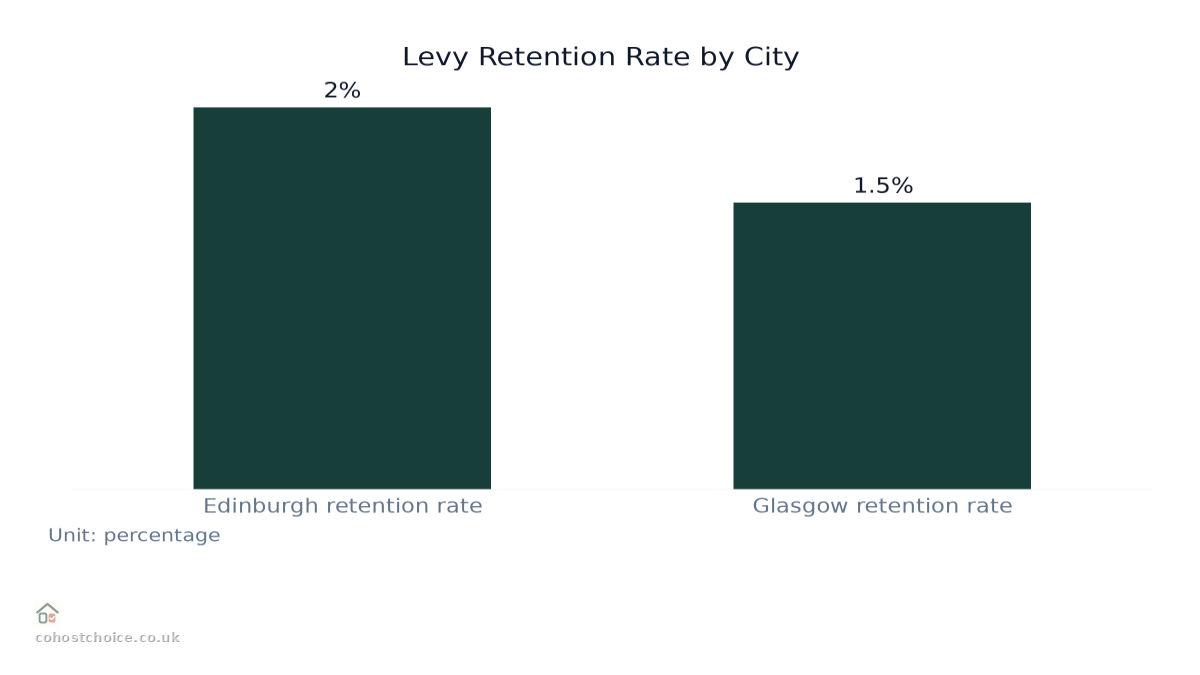
The Edinburgh visitor levy applies a 5% statutory surcharge to the net accommodation fee for overnight bookings within the council boundary. Short-term let operators must calculate this percentage solely on the lodging portion, excluding optional extras such as cleaning fees, food, or parking. Edinburgh charges a 5% levy with a 2% retention rate, while Glasgow charges 5% with a 1.5% retention rate.[2]
Accommodation providers retain this 2% administrative portion to offset digital accounting expenses and collection burdens.[1] The local authority uses the remaining funds to finance regional tourism infrastructure and public street maintenance projects. Property hosts should note that renting out leasehold apartments requires full compliance with both building lease agreements and municipal tax remittance rules.
Levy Retention Rate by City
Which Properties Must Pay the Levy
The statutory levy covers every paid overnight stay within the City of Edinburgh Council boundary across all accommodation classes.[1] This universal scope encompasses commercial hotels, boutique guesthouses, residential flats on booking platforms, and seasonal campsites.
Private rooms, entire apartments, and holiday cottages carry identical legal liabilities under the Scottish statutory framework. Hosts typically register their lodging business with the municipal portal to calculate guest charges accurately, as failure to register a holiday property can trigger enforcement notices from local planning and revenue officials.
The rules apply equally to operators trading above or below the standard UK VAT registration threshold. Unregistered small businesses calculate the 5% charge directly on the gross nightly accommodation fee without deductions. Registered commercial entities deduct input VAT before calculating the final visitor charge for their guest receipts.
Managing the Short-Term Let Tax
The short-term let tax applies only to the first 5 consecutive nights of any continuous stay at an Edinburgh holiday rental.[1] Visitors booking extended visits beyond five days pay zero council levy on any subsequent evening within that single reservation. Operators who submit england holiday letting forms for cross-border tax records must maintain distinct books for Scottish municipal properties.
Hosts must also understand the rules governing advance reservations and historical booking confirmations. Bookings secured and paid for before October 1, 2025, remain completely exempt from the visitor surcharge regardless of check-in dates.[1] Software systems must distinguish between legacy bookings and chargeable reservations to avoid levying improper fees on early holidaymakers.
Calculating the Guest Fee Accurately
The visitor surcharge applies to the net-of-VAT room rate and never touches ancillary guest charges. Operators who bundle breakfast packages, private parking spaces, or guided tours must extract these products on checkout receipts. Council guidance instructs hosts to charge the tax exclusively on pure accommodation revenue to preserve statutory uniformity.
For example, a four-night reservation priced at 100 pounds per night generates a 400 pounds lodging total subject to the charge. A host calculates the 5% municipal fee on this base amount, which equals 20 pounds in total guest levy. Adding a 50 pounds optional cleaning charge raises the total bill to 470 pounds, because the cleaning service incurs no visitor surcharge.
Guest Levy Rules for Platforms
Online booking channels like Airbnb Edinburgh do not automatically assume statutory remittance duties under local Scottish legislation. The accommodation provider retains ultimate legal responsibility for collecting and paying the guest levy to the local authority.[1] Operators must verify that their platform listings collect the surcharge directly at checkout rather than leaving uncollected balances.
Listing descriptions must display the total price including all mandatory taxes under standard UK price transparency regulations. Platforms that fail to show the visitor charge upfront expose hosts to consumer compliance investigations and guest booking disputes. Hosts should consult our holiday let safety compliance to align physical standards alongside digital tax collection systems.
Display Rules on Booking Invoices
Invoices must present a transparent line-item division showing base accommodation fees alongside statutory local taxes. Guests require itemised receipts to differentiate between discretionary commercial cleaning tariffs and mandatory council charges.
Clear documentation reduces payment disputes and simplifies corporate business travel expense claims across your portfolio. Travellers often dispute aggregated prices that disguise local administrative fees within inflated nightly room figures.
Booking engines display the 5% fee during checkout before the customer submits payment details. If a traveller cancels a reservation and stays zero nights, the operator refunds all collected levy amounts immediately.[1] Keeping clear paper records ensures rapid audit approvals during scheduled municipal finance reviews.
Remitting Holiday Let Charges Quarterly
Short-term let operators remit holiday let charges through the official visitorlevy.scot digital portal each financial quarter.[1] Providers must register their property profile, upload aggregated booking summaries, and transfer collected sums within thirty days following quarter end. Switching short term rental managers can disrupt payment routines if incoming agencies fail to update administrative portal credentials.
Council finance departments cross-reference quarterly levy submissions with municipal short-term let licensing databases to identify non-compliant operators. Operating a short-term let without a valid council licence remains a criminal offence under Scottish law. Maintaining consistent digital records across both licensing and tax platforms protects owners against severe statutory fines.
Checking Property Management Service Contracts
Property management agreements must allocate explicit legal responsibility for collecting and remitting the 5% visitor tax. The contract should clarify whether the management firm acts as your tax agent on the council submission portal. Without explicit wording, council revenue collectors hold the registered property owner liable for unpaid municipal funds.
Owners using CoHostChoice can compare like with like across management proposals to inspect compliance protocols and service boundaries. A professional firm will manage short-let properties by handling quarterly submissions and safeguarding the 2% administration allowance. Examining published information guarantees that your agency holds adequate insurance coverage and clear accountancy processes.
Management agreements must also define handling procedures for guest cancellations, booking refunds, and council audits. Agencies must preserve transaction logs, guest names, and invoices for a statutory minimum of 5 years. Failure to produce historical records during a municipal tax inspection can invalidate local short-term let operating licences.
What to Remember
The City of Edinburgh Council mandates a strict 5% visitor levy on net room revenue across all overnight short stays. Accommodation providers hold ultimate statutory liability for collecting this surcharge and submitting quarterly returns via the digital portal. Operators retain 2% of the gross tax to cover administrative expenses, but exemptions apply strictly after five consecutive nights.
Reviewing property management contracts confirms who handles digital portal filings and invoice presentations. Agencies that log all transactions for at least 5 years satisfy statutory council audits. Auditing booking engine settings protects a holiday let business against regulatory fines and licensing suspensions.
Frequently Asked Questions
Who holds legal responsibility for paying the levy to the council?
The registered accommodation provider holds the primary legal duty for remitting the visitor levy to the City of Edinburgh Council. Management companies can submit quarterly returns as authorised agents, but default liability stays with the property owner. Owners must confirm agency duties within written contracts to avoid statutory penalties.
How does the 5-night cap apply to long-term reservations?
The visitor levy applies solely to the first 5 consecutive nights of a single booking transaction. Stays lasting 6 nights or longer incur zero council tax on the sixth night and all subsequent evenings. Billing systems must automatically cease applying the 5% rate once the fifth chargeable night concludes.
How long must accommodation providers keep tax transaction records?
Providers must retain comprehensive financial records and transaction logs for 5 years following each guest stay. These archives must include itemised receipts, room rates, cleaning fees, and council submission confirmations. Council officers can request these transaction files during regular regulatory compliance audits.
Compare short-let management companies in Edinburgh by fees, service offerings, and tax compliance terms to protect your property revenue.
Find Compliant Edinburgh Management Companies