Short-Let Management 7 min read
Airbnb Cleaning Checklist: Room-by-Room Turnovers
Cleanliness is the primary factor for guest reviews in UK holiday lets. This Airbnb cleaning checklist provides a room-by-room turnover process for kitchens, bathrooms, and bedrooms. Use these professional standards to ensure hygiene, manage linen at 60°C, and maintain photographic evidence to protect your property against unfair guest refund claims.
Oliver Bennett
Short-let Operations Contributor
Writes about practical short-let operations, listing readiness, and day-to-day property management for hosts.
Guest expectations around cleanliness dictate review scores and determine repeat revenue across UK holiday lets. Research shows that cleanliness is the most significant factor in guest reviews, directly impacting ratings and repeat bookings.[2] Professional hosts protect their operational standing by replacing guesswork with an exact room-by-room turnover sequence that prevents guest complaints.
Area 1: Kitchen Sanitation and Restocking
Kitchen sanitation requires strict hygiene routines because guests inspect food areas immediately after arrival. Cleaners must empty all cupboards, clear leftover food, and wipe down appliance handles using UK Health Security Agency-approved products.[1] You can follow this essential airbnb hosting tasks process to keep your property hygienic and secure positive reviews from your first arrivals.
Food preparation surfaces demand high attention during every changeover. Scrubbing ovens, degreasing hobs, polishing taps, and cleaning microwave interiors removes trapped odours. Furthermore, confirming that the kitchen provides hot and cold running water alongside fully functional refrigeration units remains a priority before incoming guests check in.
Appliance checks prevent negative feedback during stays. Verifying cutlery sets, inspecting dishware for chips, and wiping down internal shelves ensures quality. Leaving dirty pans or expired condiments damages listing reputations, so disposing of opened items and replenishing tea, coffee, and individually packaged welcome essentials occurs during each visit.[1]
Area 2: Bathroom Hygiene and Linen
Missing a single stray hair can sometimes lead to guest dissatisfaction and potential refund requests through platform customer support channels.
Sanitising hard surfaces requires disciplined dwell times for antibacterial sprays. Spraying taps, wiping tiles, scrubbing basins, and mopping floors using designated, colour-coded microfiber cloths prevents cross-contamination from other rooms.[1] Keeping bathroom toiletries cupboards out of reach of children maintains household safety.
Professional linen presentation sets the visual standard for luxury. Providing freshly laundered towels, bath mats, and hand towels that show no marks or fraying is essential. Washing bathroom linens at a minimum of 60°C destroys bacteria and upholds hygiene standards.
Area 3: Bedroom Linen Presentation Checks
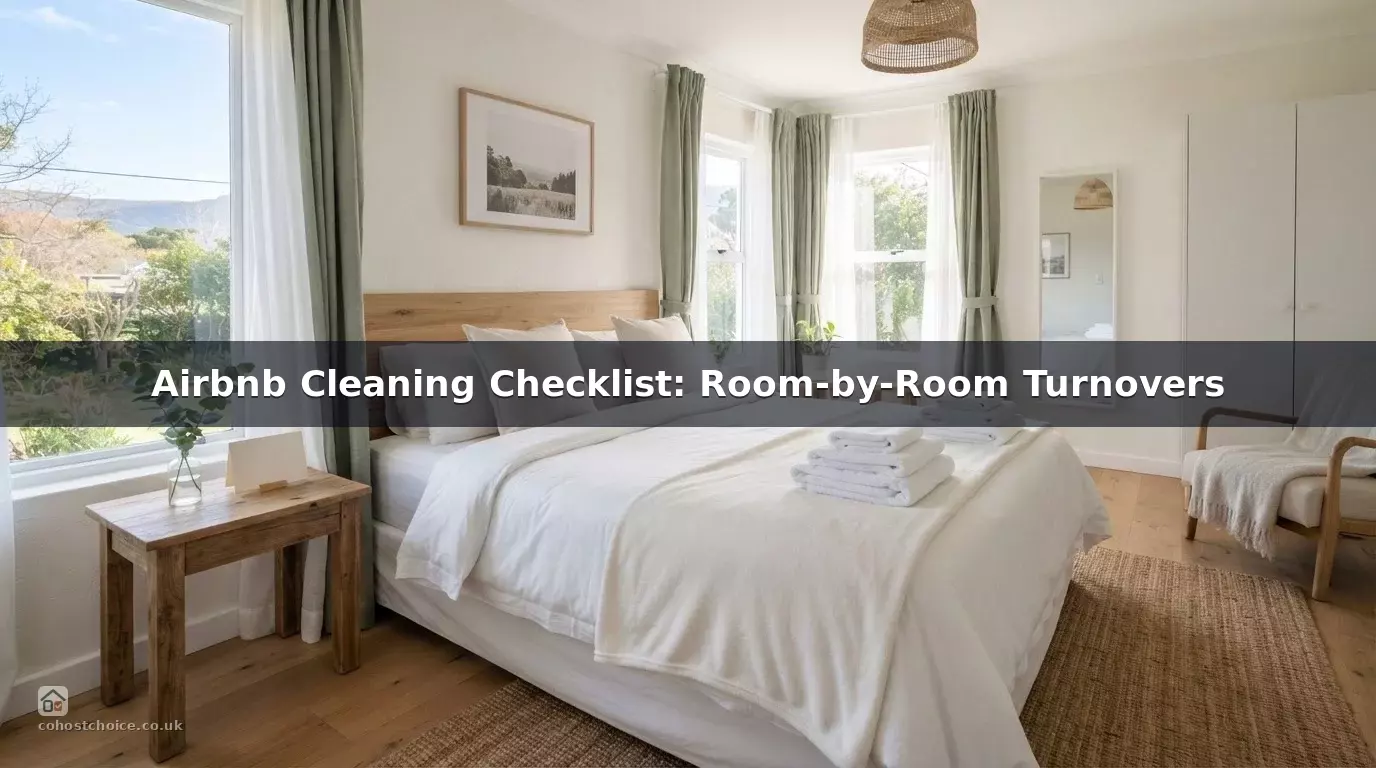
Bedroom standards centre on fresh linen and dust-free surfaces. Cleaners must strip beds immediately upon entering the property, inspect mattress protectors for marks, and check corners for trapped hair before fitting fresh sheets. Hosts often spend time comparing airbnb revenue tools when evaluating operational yields, but clean bedrooms represent the true foundation of profitable guest ratings. Linens and towels must be laundered at a minimum of 60°C to destroy pathogens and maintain professional guest hygiene standards.[1]
Bed presentation requires crisp hospital corners, smooth duvet covers, and plumped pillows. Inspecting under beds with a torch retrieves lost guest items, while vacuuming accumulated dust bunnies from skirting boards keeps surfaces clean. Curtains or blinds must exclude light to provide complete privacy, and window handles require periodic checks to confirm secure latching mechanisms and prevent drafts.
Area 4: Living Area Comfort Maintenance
Living areas require detailed surface cleaning and cushion dressing to create welcoming environments. Vacuuming sofa upholstery, wiping coffee tables, dusting television screens, and cleaning picture frames using dedicated microfiber cloths is standard. While sofa beds provide additional sleeping options for families, regulations exclude pull-out furniture from official permanent bed counts.
UK safety rules state that heating systems must be capable of maintaining a room temperature of 18.5°C across all primary living spaces.
Area 5: Final Walkthrough Photo Evidence
A final property walkthrough protects hosts against unfair disputes and ensures complete turnover readiness. Supervisors must walk through each room, check lighting, inspect supply levels, and take date-stamped photographs of pristine beds, clear worktops, and spotless bathrooms. These photographic records help operators navigate airbnb refund rules whenever guests submit inaccurate cleanliness claims after arrival. Digital photo logs also confirm that previous occupants left no concealed damage behind.[2]
Ensuring fire escape routes remain unobstructed by laundry bags or vacuum cleaners is a critical safety requirement.
Periodic Deep-Clean Maintenance Tasks
Beyond standard turnovers, maintaining the long-term condition of the property requires a more rigorous approach. Routine turnover cleaning removes surface grime, but deep cleaning targets accumulated dirt inside hidden fixtures. Deep cleaning should be performed every 3 to 6 months to maintain high asset quality.[3] Property owners must schedule intensive cleaning sessions during low-occupancy periods to protect furnishings.
Intensive maintenance addresses fabrics and ventilation systems. Operators should arrange carpet steam-cleaning, wash heavy curtains, and descale internal showerheads to remove stubborn limescale buildup. Neglecting periodic maintenance causes permanent carpet stains, degrading guest impression scores and driving down average nightly rates.
Appliance deep maintenance prevents sudden equipment breakdowns during busy holiday periods. Technicians pull large appliances away from walls to vacuum refrigerator condenser coils and remove trapped grease behind cookers. Gas appliances must be periodically inspected and tested every 12 months by certified Gas Safe engineers.
Agreeing Cleaning Standards with Managers
Property owners must establish explicit service level agreements before hiring professional turnover teams. Contracts must specify arrival windows, linen laundering temperatures, restocking responsibilities, and dedicated turnaround timelines between morning checkouts and afternoon arrivals. Landlords often choose to coordinate guest stay logistics through experienced local partners to ensure consistent operational execution. Management agreements should also establish clear benchmarks for acknowledging cleaning-related complaints within 2 hours.
Dispute workflows require documented operational standards. The agreement defines who covers re-cleaning costs if incoming guests report dirty bathrooms or unwashed linen. Recording completed tasks inside a detailed cleaning log that lists dates, cleaner names, and used cleaning products, and retaining these records for at least 12 months, provides necessary accountability.
Selecting Professional Cleaning Management Services
Selecting the right turnover provider determines whether your holiday let achieves sustainable profitability or suffers frequent operational disruptions. Owners must evaluate management proposals by checking liability cover, staff training protocols, and linen sourcing practices. Clear contracts ensure service providers supply appropriate personal protective equipment and train cleaners on exact chemical dilution ratios to maintain occupational safety.
Independent directory platforms simplify service partner vetting. CoHostChoice provides a straightforward way to research short-let management companies across diverse service areas without bias. Property owners can compare like with like, inspect published information on operational capabilities, and enquire with confidence before signing commercial agreements.
What to Remember
Research demonstrates that cleaning-related issues can cause negative feedback, making it important for hosts to acknowledge complaints and resolve urgent problems in a timely manner.
Property owners should standardise their changeover routines by supplying cleaners with detailed checklists and colour-coded equipment. Audit your turnover procedures today, review management contracts against clear performance benchmarks, and ensure your team completes all mandatory fire safety and gas checks on schedule. Consistent operational oversight supports long-term success.
Frequently Asked Questions
How often must holiday let properties receive professional cleaning?
Self-catering properties must be serviced between each let and at least weekly for longer-term stays. Routine changeovers handle linen replacement, hard surface disinfection, and basic restocking.
What temperature should cleaners use for laundering holiday let linen?
Linens and towels must be laundered at a minimum of 60°C to meet professional hygiene standards and destroy bacteria. Mattress protectors and pillow covers should also be changed between every guest arrival.
How long should operators keep property cleaning and turnover records?
Cleaning logs should record the date, cleaner name, tasks completed, and products used, with records kept for at least 12 months. Maintaining clear date-stamped records protects owners during guest refund disputes and regulatory safety audits.
Search local management providers by location, compare published service fees and cleaning standards side by side, and request a detailed quote from your preferred partner today.
Compare Professional Short-Let Management Companies